English
 Deutsch

Introduction
Inclusive education is a system of education in which children with special educational needs (SEN) learn together with non-disabled peers. This approach is based on the idea of equal opportunities and helps all children to socialise, regardless of their physical or mental characteristics.
According to the UN Convention on the Rights of Persons with Disabilities, inclusion is not just about school accessibility, but also about creating a comfortable environment for the development of each child. However, in practice, the implementation of inclusive education faces a number of difficulties.
1. Who are children with special needs?
This category includes children with:
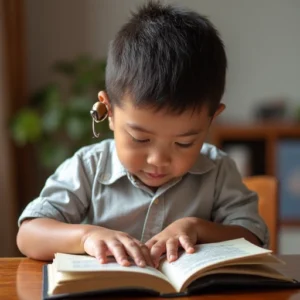
– hearing, visual, musculoskeletal disorders;
– Autism spectrum disorders (ASD);
– Mental or speech developmental delays;
– intellectual disabilities;
– severe chronic illnesses.
Important: Inclusion is not only about children with disabilities, but also about those who are experiencing temporary difficulties (e.g. after an injury).
2. Principles of Inclusive Education
Several key conditions must be met for inclusion to be successful:
А. Accessible environment
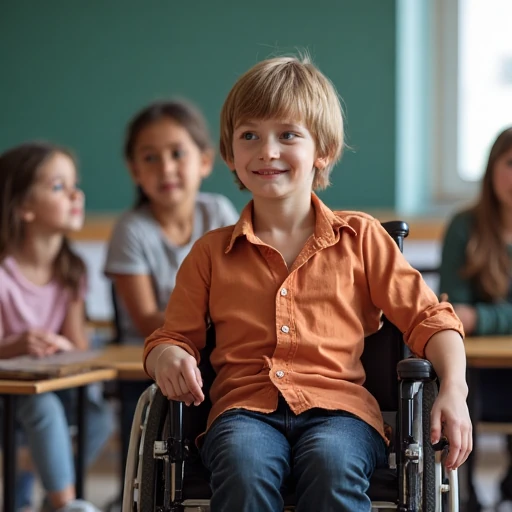
– Ramps, lifts, tactile tiles for children with cerebral palsy or visual impairment.
– Special educational materials (Braille, sign language interpretation).
B. Adapted programme
– Individualised education plan (IEP) taking into account the child’s capabilities.
– Use of alternative teaching methods (visual cues for children with ASD).
C. Teacher training
– Teachers must know the basics of remedial pedagogy.
– It is important to be able to work with tutors (accompanying teachers).
D. Psychological support
– Assistance in adaptation not only for a child with OOP, but also for his/her classmates.
– Prevention of bullying and stigmatisation.
3. Problems of Inclusion
Despite progress, inclusive education faces difficulties:
– Shortage of specialists: defectologists, speech therapists, tutors.
– Unpreparedness of schools: many buildings are not equipped for children with disabilities.
– Society’s bias: parents of normal children are sometimes against “special” students in class.
– Formal approach: schools accept a child with disabilities but do not provide real support.
Example: A child with autism may be enrolled in a regular class, but without a tutor and an adaptive programme he/she will not be able to learn the material.
4. Benefits of Inclusive Education
When the system works right, everyone wins:
– For children with OOP:
– Better socialisation and development of communication skills.
– The opportunity to learn in a more flexible programme.
– For normal children:
– Building tolerance and empathy.
– Experience of interacting with different people.
– For society:
– Reduction of discrimination.
– Realisation of the principle of ‘education for all’.
5. How to develop inclusion?
To improve the situation it is necessary to:
1. Invest in infrastructure: refurbish schools, buy specialised equipment.
2. Train personnel: to introduce inclusion courses in pedagogical universities.
3. Change the attitude of society: to conduct educational campaigns for parents.
4. Develop tutoring: every child with special needs should have an accompanying person.
5. Use technology: online learning, applications for non-verbal children.
Conclusion
Inclusive education is not just a trend, but a necessity of modern society. It teaches children kindness, patience and mutual help, and gives “special” children a chance for a full life. The main rule of inclusion: It is not the child who should adjust to the system, but the system – to the child.